

Planning Events in Dubai Right Now: What the Numbers Don’t Tell You
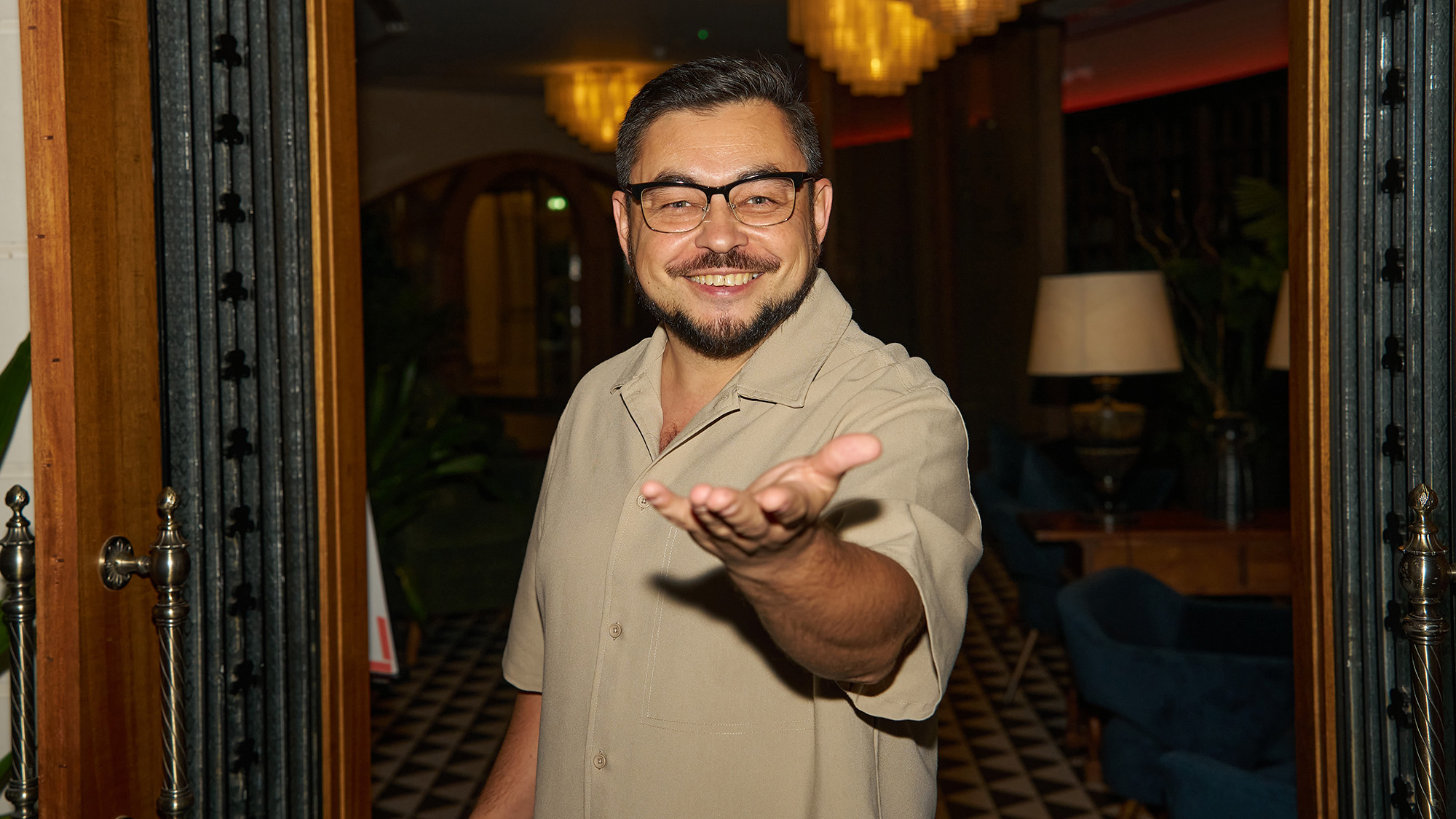
Sergey Larin
Organiser of EventMania Festival, MC, scriptwriter, director, and event manager
March 2026 was a strange month to be in the events business in Dubai.
Hotel occupancy, which had been running at 84.7% in February, collapsed to 33.1% - a 54% year-on-year drop - following the US and Israeli airstrikes on Iran at the end of February. Northbourne Advisory, the only organisation that was actually measuring rather than issuing statements, tracked the fate of 275+ events across the UAE, Qatar, Saudi Arabia, and Bahrain. The result: 99 postponed or rescheduled, 45 cancelled outright, 29 left in limbo.
I watched this happen from the inside. And what struck me most was not the scale of the disruption - it was the mechanism. As Justin Kerr-Stevens of Northbourne put it: “Events didn’t stop because they couldn’t happen. They stopped because insurers wouldn’t underwrite them, organisers didn’t have a shared operating picture, and international participants no longer had confidence to attend.”
That distinction - between capability and confidence - is the most useful frame I know for understanding what Dubai’s event market looks like right now. And it is the frame I want to offer anyone planning an event here in the second half of 2026.
What Actually Stopped, and What Didn’t
The short answer: international formats stopped. Local ones largely didn’t.
Corporate events serving GCC audiences continued through the disruption. Business does not pause for geopolitics - it adapts. The domestic operational infrastructure - venues, technical production, catering, decoration - kept running. Venue operators, freed from international tourist traffic, are currently offering rates and added-value packages that would have been unthinkable two years ago. Several landmark properties have used the quiet period for long-overdue renovations: Jumeirah Burj Al Arab, Armani Hotel Dubai, Park Hyatt Dubai, JW Marriott Marquis, and others. When they reopen - most by Q4 2026 - they will come back at a higher competitive standard.
The vendors I work with daily - technical production companies, decorators, catering operators - are functioning normally. Photography continues, particularly for private events and children’s celebrations. The catering market has matured to the point where many private clients now bypass agencies entirely, going direct to suppliers and self-coordinating. It is more work for the client, but the economics hold.
What has genuinely changed is the weight planners now assign to international logistics risk. This was always a variable. It is now a primary planning consideration.
The Autumn Problem Nobody Is Talking About Loudly Enough
Here is what I think is underappreciated in current market commentary: autumn 2026 will not simply be a recovery. It will be an overload.
Of the events that received new dates after the Q1 disruption, twenty have already migrated to the October–December window. As the situation normalises, more will follow. They will be joined by events that were already scheduled for that period. The arithmetic is simple and the implications are significant: a shortage of available venues, of qualified technical contractors, and of viable dates.
For anyone currently planning an autumn event in Dubai, the time to lock in venues and key suppliers is now - not when confidence fully returns, not when the news cycle improves. The operators who understand this market are already doing it.
The International Logistics Question
If your event lives entirely within the UAE - local organiser, local guests, local vendors - the operational picture is strong and getting stronger. The challenge is specifically about the international supply chain: speakers flying in from abroad, performers, specialist technical equipment crossing borders, and international attendees themselves.
The signals here are mixed but directionally positive. Airlines are moving: Aeroflot has opened bookings for Dubai flights from June 1. Russian tour operators - one of the more responsive real-time indicators of market sentiment - are talking about recovery to 70–80% of pre-crisis volumes by early autumn. Apply a discount to those projections, since they come from people who very much want sales to resume. But airlines do not open routes without demand. That signal is real.
What this means practically for international event planning:
Speaker and performer logistics require more lead time and more contractual specificity than the pre-2026 baseline. Confirm travel documentation requirements early. Build cancellation and substitution clauses that reflect real-world scenarios. A viable alternative is not a backup plan - it is part of the original operational design.
Technical equipment from abroad should be treated as a potential bottleneck. Dubai-based technical suppliers are capable and often more sophisticated than international planners expect; use them proactively rather than as a fallback. If specialist equipment must come from outside, plan for delays measured in days or weeks, not hours.
International attendee support has expanded in scope. For conferences drawing from multiple countries, the organiser’s role now extends into active travel facilitation - visa guidance, clear documentation, direct communication about logistics. This is expected, not exceptional.
The Audience Question
Dubai’s resident population is approximately 90% expatriate - large, established communities from South Asia, the Arab world, Europe, Russia and the CIS, East Africa, Southeast Asia, and increasingly, the Americas. This is not a homogeneous international audience. It is a mosaic of communities, each with its own communication channels and event cultures.
For events targeting specific professional verticals, the practical implication is to work through community and industry networks inside the UAE rather than relying on international registration flows. Many of your target attendees may already be here. The question is how to reach them - and that requires local knowledge, not global marketing.
For events designed to attract guests from outside the UAE, the value proposition needs to be explicit and competitive. Dubai competes with Singapore, Istanbul, and Lisbon for mobile international audiences. What it offers distinctively: genuinely central geography connecting Europe, Asia, and Africa; world-class hospitality infrastructure; a high concentration of globally mobile professionals as a resident base. What it requires in return: investment in outreach, and realism about the additional logistics involved in getting people here.
The Structural Shift Underneath All of This
One more thing worth naming, because it is easy to miss when you are focused on the immediate disruption.
The UAE is methodically building the next layer of its economic architecture - manufacturing, export-oriented production, logistics, B2B ecosystems - independently of tourism conditions. Dubai’s GDP grew 6.4% in Q4 2025. The Make it in the Emirates forum opened in Abu Dhabi in early May 2026 as a working instrument of industrial policy: offtake agreements, investment deals, technology transfers. These are not events for tourists. They are events for an economy that has decided what it wants to become.
For the event industry, this matters because it means a growing pipeline of formats that do not depend on international tourist confidence: manufacturing forums, industry conferences, investment summits, B2B deal-making platforms. The market disruption of Q1 2026 is real and its effects will be felt through autumn. But it is happening against a backdrop of structural demand that is not going away.
What I Would Tell Someone Planning a Dubai Event Right Now
The foundation is intact. The vendors are capable. The venues are hungry. The domestic market is alive.
The risk is specifically in international logistics, and the mitigation is specifically in planning - more contractual conditions, more lead time, more contingency than the pre-2026 baseline required.
Autumn will be busy, possibly overheated. Book now.
And if you are building an event that depends on international audiences, understand that the confidence gap - not the capability gap - is what you are actually working against. It closes with time, with safety signals, and with successful events that demonstrate the region is back in business. We are in the middle of that process, not at the beginning and not yet at the end.
Sergey Larin is an event producer and MC based in Dubai, organiser of EventMania Festival. He publishes a weekly market review of the GCC events industry and is the author of several books on event management in Russian and English.
Another publications
Hong Kong: A City That Works as an Event
Five days in Hong Kong feel like a separate reality. Here, neon signs reflect in the water of the "pearl" Victoria Harbour, retro trams pass by glass skyscrapers, and a business meeting can be followed by a tea ceremony at a monastery or a traditional jong boat with red sails.
ITB China 2026 Concludes Successfully with more than 23,500 Attendees
The three-day event recorded continued year-on-year growth, welcoming more than 23,500 attendees. A total of over 44,000 high-value business meetings were facilitated during the show, highlighting China’s continued appeal and strong growth momentum in global travel industry cooperation.
What if…? When the Unexpected Becomes Part of the Job
In the world of events and destination management, every project begins with a carefully designed plan. But anyone who has spent enough time in this industry knows that success is not defined only by what goes according to plan — it is often defined by what happens when things do not.