

Oman MICE Trends 2026- A Shift Toward More Intentional Travel
The MICE landscape in 2026 feels like it’s in the middle of a reset. The usual destinations are still in play, still dominating conversations, but they’re no longer the default in quite the same way. There’s a pause happening. A reconsideration.
Planners are starting to look more closely at what actually delivers value. Not just infrastructure, but how easy a destination feels, how flexible it is, and whether the experience holds together in a meaningful way.
From an on-ground perspective in Oman, that shift is already visible. Groups are getting smaller. Programs are tighter, more focused. There’s less interest in layering experiences on top and more interest in making them feel like they belong.
Ease and access are driving decisions
Right now, simplicity matters more than most will openly admit. Planning cycles are shorter, and there’s less room for friction.
For the Russian market, Oman offers a clear sense of reliability. The situation in the country remains calm, and direct flights to Moscow continue to operate. That continuity makes a difference. It allows planners to move forward with confidence, knowing that access remains stable.
More often than not, ease of access is what decides whether a destination even makes it past the first stage of consideration. On that front, Oman holds steady.
Compact, multi-experience destinations are gaining ground
There’s a noticeable move away from single-location programs. What planners want now is variety, but without the complexity that usually comes with it.
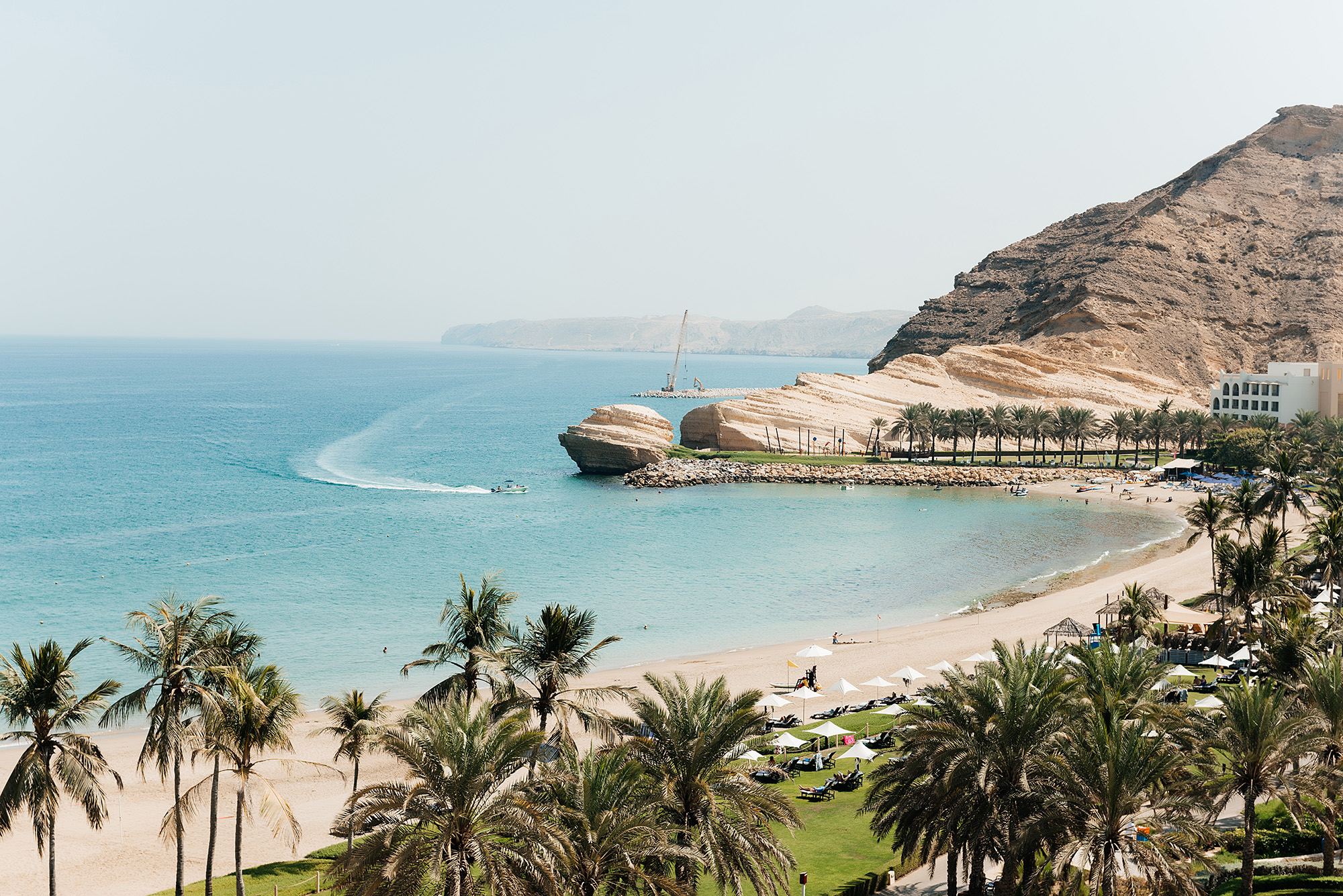
This is where Oman fits naturally. The geography works in its favour. Within a relatively compact space, it brings together city, mountains, desert, and coastline in a way that feels manageable rather than stretched.
What might otherwise require multiple destinations can be delivered within one program. And importantly, without it feeling rushed.
Programs are becoming more experience-led
Scale has taken a step back. Engagement is what’s driving decisions now.
In Oman, that shift plays out quite organically. A meeting in Muscat doesn’t stay confined to a meeting room. It moves. Into the Hajar Mountains, where the atmosphere changes almost immediately. Into Wahiba Sands, where the landscape slows everything down. Or out along the coast, where the pace shifts again.
These transitions don’t take much time, which makes them workable even within shorter itineraries. The destination starts to carry the program, rather than just hosting it.
Flexibility and value are influencing destination choice
Planning isn’t as fixed as it used to be. There’s more uncertainty, more need to adapt along the way.
In that context, Oman is in a particularly favourable position. There’s a degree of flexibility in how programs can be built and adjusted, and at the moment, hotels across the country are offering very favourable accommodation rates. It’s a practical advantage that isn’t always highlighted, but it is increasingly shaping how decisions are made.
Execution and local expertise are under greater scrutiny
As expectations shift, so does the role of local partners.
It’s no longer just about logistics. What matters more is how the program comes together. The pacing, the transitions, the small details that determine whether something feels seamless or disjointed.
Working with international planners, this comes up consistently. There’s a need for cohesion.
At Zahara Tours, that’s where the focus sits. Not on adding more elements, but on connecting what’s already there in a way that feels natural. When it works, the destination doesn’t feel complex. It just flows.
Sustainability is becoming embedded, not added
Sustainability has moved into the core of decision-making. It’s no longer an add-on or a separate conversation.
In Oman, this shows up in quieter ways. More consideration around the environment, more engagement with local communities. It’s not always overt, but it’s becoming part of how programs are shaped.
Looking ahead
Oman isn’t trying to compete head-on with the most established MICE destinations. That’s not where its strength lies.
What it offers is something more balanced. A destination that is stable, accessible, and adaptable to the way planning is happening right now. One where business objectives are met, but the experience itself feels considered, not constructed.
From this perspective, Oman is shifting. It’s no longer sitting on the edge of consideration. It’s moving closer to the centre. And for planners paying attention, that shift is becoming harder to ignore.
MICE&more GLOBAL thanks Arun Raj, Vice President of Zahara Tours DMC Oman for the provided expert material.
Another publications
Hong Kong: A City That Works as an Event
Five days in Hong Kong feel like a separate reality. Here, neon signs reflect in the water of the "pearl" Victoria Harbour, retro trams pass by glass skyscrapers, and a business meeting can be followed by a tea ceremony at a monastery or a traditional jong boat with red sails.
ITB China 2026 Concludes Successfully with more than 23,500 Attendees
The three-day event recorded continued year-on-year growth, welcoming more than 23,500 attendees. A total of over 44,000 high-value business meetings were facilitated during the show, highlighting China’s continued appeal and strong growth momentum in global travel industry cooperation.
What if…? When the Unexpected Becomes Part of the Job
In the world of events and destination management, every project begins with a carefully designed plan. But anyone who has spent enough time in this industry knows that success is not defined only by what goes according to plan — it is often defined by what happens when things do not.
Previous publications
Sustainability in MICE: the Moroccan experience
Morocco is increasingly emerging as a leading destination for sustainable MICE experiences, where rich cultural heritage meets a growing commitment to responsible tourism. At Visit Morocco Travel & Events, sustainability is not a trend, it is a core principle guiding how we design and deliver events across the country.
Sustainability in MICE: A Global Perspective with a Roman Approach
Sustainability has become a defining priority in the global MICE (Meetings, Incentives, Conferences, and Events) industry in Europe. In Italy, where cultural heritage and tourism flows must be carefully balanced, this topic is even more relevant. Companies, institutions, and destinations are increasingly expected to reduce environmental impact while creating meaningful, high-quality experiences.
Global MICE Outlook 2026
The event infrastructure around the world is developing dynamically and it is very difficult to stay up to date with the latest news. MICE&more GLOBAL experts from different countries shared the most recent information, which we have analyzed and combined in this article