

The Legacy Effect: 5 Ways to Make Your Next Conference Matter
As we move towards 2026, the MICE industry faces a timely opportunity: to redefine not just how events are hosted, but why. Gone are the days when success was measured solely by badge scans and hotel bookings. Today, the most meaningful conferences are those that leave a mark long after the last roundtable ends.
Legacy is no longer an optional extra. It’s becoming the standard by which forward-thinking associations and host cities are judged. And leading the charge is BestCities Global Alliance, a network of 13 international destinations committed to helping events go beyond the transactional to deliver real, long-term impact.
Through initiatives like the Incredible Impacts Programme in partnership with ICCA, the Madrid Challenge, and a pioneering framework for advancing event legacies through impact measurement, BestCities is not just talking about legacy, it’s building the blueprint.
So, how do you design a conference that leaves a lasting legacy? With practical examples from BestCities member destinations Dublin, Copenhagen, and Berlin, here are five steps any association, destination, or PCO can follow to make purpose part of the plan.
Step 1: Lay the Foundation for Lasting Impact
If legacy is the destination, intention is the departure gate. The best events don’t wait until the agenda is finalised, but plant the seeds of impact in the RFP.
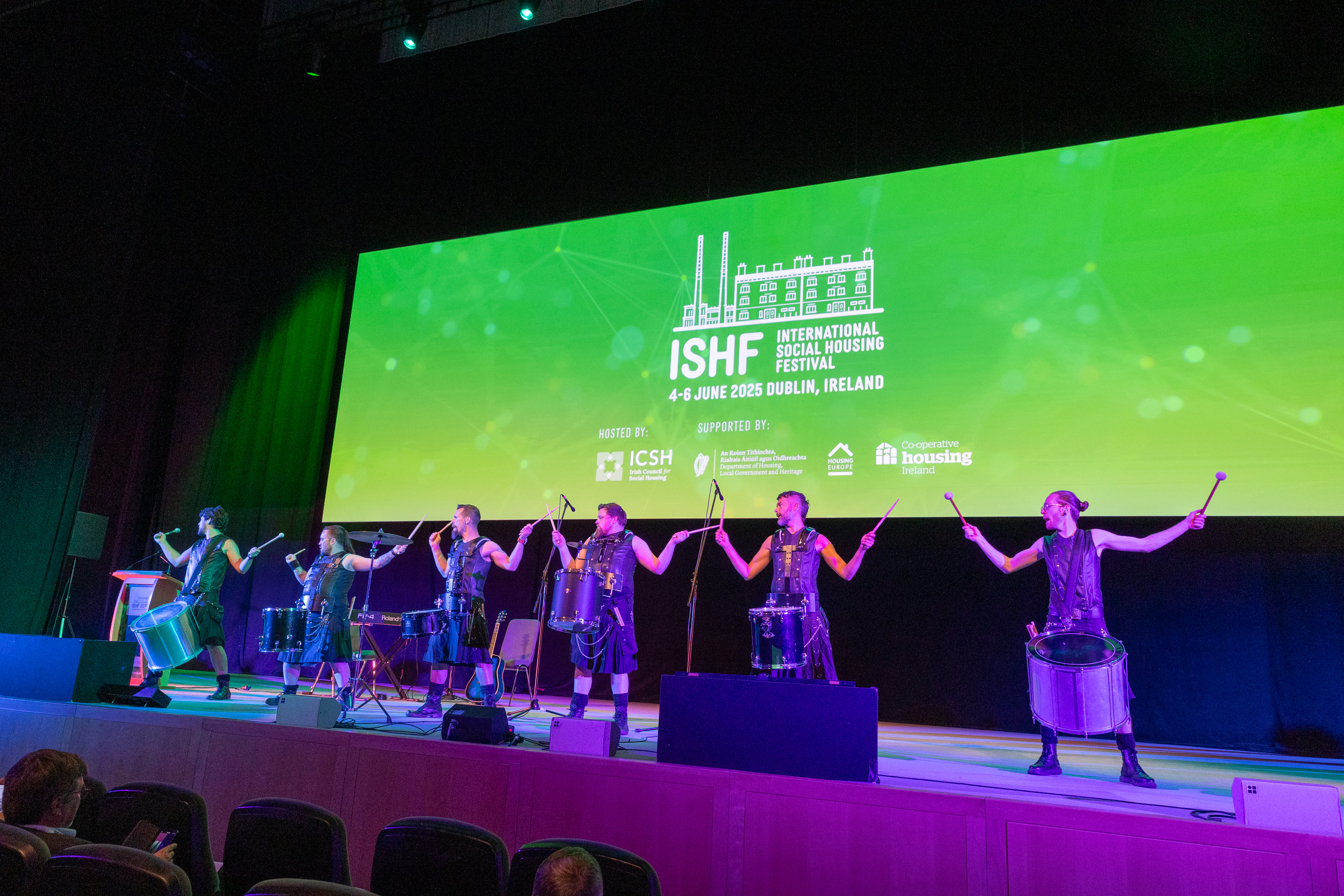
Take Dublin, where the bid for the 2025 International Social Housing Festival (ISHF) didn’t just promise a venue and a view – it presented a social mission. Fáilte Ireland worked closely with the Irish Council for Social Housing to embed impact goals from the start, aligning the event with national priorities around community building and social inclusion.
“Legacy planning should ideally start at the very beginning of the event design process to ensure goals are embedded in the event’s purpose and KPIs,” says Sally-Ann O'Brien, Business Events Manager at Fáilte Ireland. “We start early, identify the right partners, and co-design measurable impacts that leave a lasting handprint.”
In Copenhagen, the Legacy Lab joins the bid phase early, often armed with specific ideas for legacy initiatives. “That early dialogue is where the magic begins,” says Jakob Fuglsang, Manager, Copenhagen Legacy Lab. “When legacy is part of the first conversation, it becomes part of the event’s DNA.”
It’s a strategy that turns hosts into partners, and transforms proposals into promises.
Step 2: Build a Legacy Dream Team
No one builds a legacy alone. The most impactful conferences are those that bring the right people into the room, and gives them agency to influence the outcome.
For ISHF, Dublin brought together an eclectic mix: housing advocates, tenants, children’s choirs, and policymakers. The result? A storytelling project that gave voice to lived experiences and helped influence housing dialogue at both national and European levels.
Copenhagen follows a similarly inclusive model. Legacy projects often involve universities, non-profits, municipal agencies, and residents. It’s an approach that ensures legacy isn't imposed, but co-created.
In Berlin, the vision is equally community-centric. “In a perfect world, every conference would partner with a local NGO, offering visibility, collaboration, and benefits that last long after the closing ceremony,” says Marco Oelschlegel, Director Conventions, visitBerlin Berlin Convention Office.
Step 3: Make Impact Count – and Countable
Legacy isn’t just about doing good, it’s about proving it. From carbon calculators to community engagement metrics, the future of legacy lies in measurement.
At ISHF, organisers used Fáilte Ireland’s Business Events Carbon Calculator to track environmental impact, while measuring social engagement through tenant participation and outreach.
“Measurement is what gives legacy weight,” says O'Brien. “You can’t evaluate progress or replicate success without clear data and documented outcomes.”
In Copenhagen, evaluation goes well beyond the closing session. “We track projects for two years post-event,” says Fuglsang. “It’s how we understand what worked, what didn’t, and what could scale.”
For those beginning their legacy journey, BestCities' Impact Measurement Framework offers a practical starting point, helping organisers and destinations set meaningful KPIs, track progress, and share results transparently.
“In the world of legacy, data builds trust,” says Loren Christie, Managing Director, BestCities. And when you can back your story with real results, that’s when people listen.”
Step 4: Make Legacy the Main Event
Legacy isn’t a panel discussion or a line item. It’s a thread that should run through the conference experience, from pre-event planning to post-event partnerships.
In Berlin, even without a formal framework, but experts consultation, the city supports organisers to find practical ways to embed legacy into event design. In Copenhagen, a robust toolbox—along with inspirational case studies—helps organisers move from idea to action, ensuring projects don’t end as PDF summaries.
And in Dublin, the ISHF legacy continues, with a digital library of tenant oral histories now shared across Europe – a lasting ripple effect from a three-day gathering.
The key is continuity. Who takes the baton when the event wraps up? Legacy requires handoffs, not handshakes.
Step -5: Share the Playbook
For those already implementing legacy into their events, the next move is to pay it forward. Document your impact, share insights. Raise the collective bar.
BestCities offers a platform to do just that. The Incredible Impacts Programme not only provides grants and recognition, it also curates case studies that inspire others to think beyond the ballroom.
And with 13 destinations around the globe, there’s no shortage of peer learning. As Fuglsang points out, “Legacy is complex, but no one has to start from scratch. There are already-tested frameworks and case examples out there.”
Rethinking ROI
Imagine if the return on your next conference wasn’t just higher attendance or increased revenue, but a policy shifted, a stigma reduced, or a community empowered.
As 2026 approaches, it’s the perfect moment for the business events world to ask itself: What are we really leaving behind?
Because the best conferences don’t just happen. They matter.
Another publications
Global MICE Outlook 2026
The event infrastructure around the world is developing dynamically and it is very difficult to stay up to date with the latest news. MICE&more GLOBAL experts from different countries shared the most recent information, which we have analyzed and combined in this article
Chile: The Global Hub for Green Incentives and Scientific Wonder
Chile is no longer just a nature destination; it is a laboratory for the future of the MICE industry. By 2026, Chile will be the world’s leading destination for "Scientific and Regenerative Incentives," offering safety, stability, and radical exploration.
Argentina: Redefining the Luxury Incentive Frontier
Argentina has transitioned from being a bucket-list destination to a strategic powerhouse for high-impact incentive travel. As we look toward 2026, the country is leveraging its unparalleled cultural depth and diverse geography to offer "Radical Authenticity" to the global corporate elite.
The AI Revolution in MICE: Moving from Social Networking to the Era of Recommendation Feeds and Agentic Search
The Business Travel and MICE landscape is witnessing its most significant shift since the dawn of the internet. As traditional marketing funnels lose their edge, Artificial Intelligence is rewriting the rules of engagement. From how planners discover venues to how delegates experience content, we are moving beyond "who you follow" to "what the algorithm knows you need."
Uzbekistan's MICE Ascent
In recent years, Uzbekistan has made significant strides in developing its MICE sector. Government support for tourism, simplified visa procedures, and active participation in international professional exhibitions and forums have fueled growing interest from foreign companies and event planners.
Previous publications
BESTIVAL 2025: Berlin as a Leading Congress Metropolis
Berlin, 3 July 2025 Today marks the opening of BESTIVAL 2025, Berlin’s international business festival for the event industry, hosted at the Alte Münze. More than 500 event professionals from across Europe –including many from Germany – and 40 speakers are gathering at the invitation of the Berlin Convention Office of visitBerlin to exchange ideas over two days on creative solutions, strategies and sustainable event concepts.
ITB Asia 2025 Sets New Record with more than 60,000 Business Appointments and Strong Industry Momentum
With unmatched growth in international participation, a record number of business meetings, and a sharp focus on innovation, sustainability, and strategic partnerships, ITB Asia has firmly established its position as the largest travel trade show in Asia Pacific shaping the future of travel in the region.
ITB India 2025 Wraps Up in Mumbai with High International Participation
Following three dynamic days of business, networking, and knowledge exchange, ITB India 2025 concluded today, bringing together international and local exhibitors with curated buyers and reaffirming its role as the premier meeting point for the region’s travel industry.