

Business Travel and MICE Trends in Italy
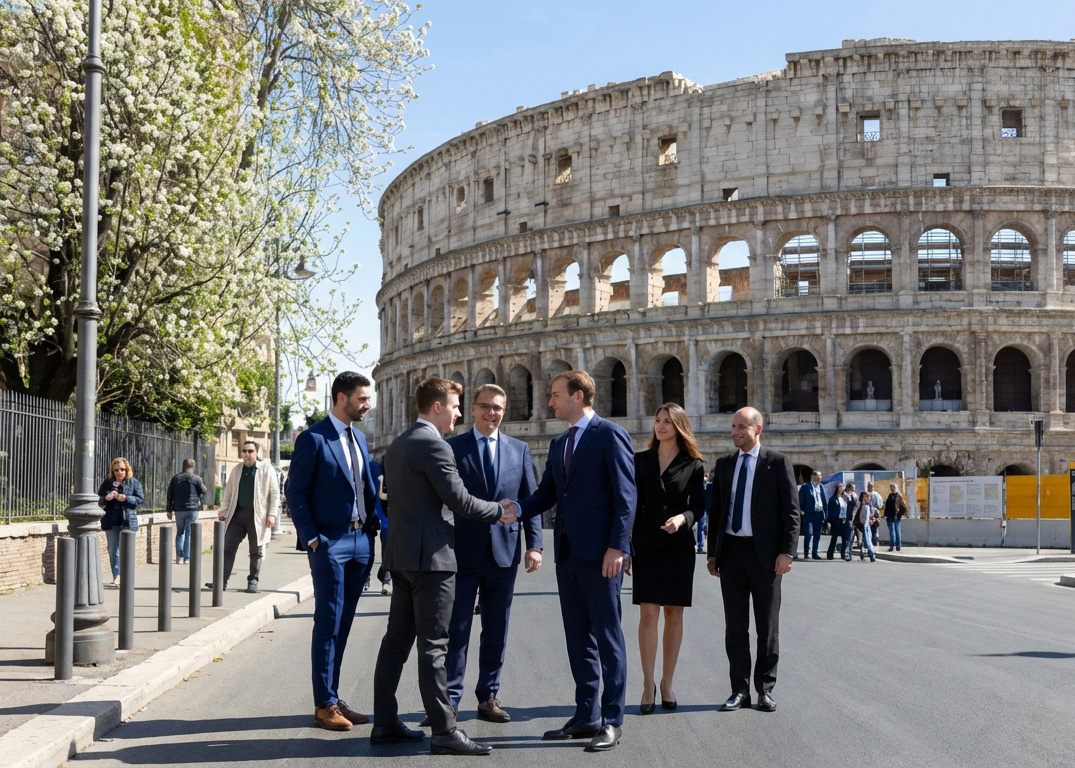
2025 Insights and 2026 Outlook
Italy, renowned for its history, culture, and world-class cuisine, is not only a leading leisure destination but also a key hub for business travel and the MICE industry. Thanks to its strong infrastructure, global reputation, and experiential value, Italy continues to strengthen its position on the international meetings stage.
As we move through 2025 and look ahead to 2026, the Italian business travel and MICE sector is evolving rapidly, shaped by sustainability, technological innovation, infrastructure investment, and changing traveler expectations.
Key Trends Shaping 2025
Sustainability and Responsibility
Sustainability has become a core priority for business travel and MICE in Italy. Event organizers increasingly focus on carbon awareness, eco-friendly venues, responsible sourcing, and sustainable event design, aligning with European and global environmental standards.
Technology and Hybrid Formats
Technology plays a central role in transforming events and travel experiences. Hybrid and virtual formats are now a permanent feature of the MICE landscape, while AI and digital event platforms support personalization, engagement, and operational efficiency.
Personalization and Local Experiences
Business travelers increasingly seek tailored experiences. Customized itineraries, local cultural immersion, gastronomy, and bleisure travel are key elements that enhance engagement and destination appeal.
Italy as a Growing Hub for International Events
Italy is hosting more and more international congresses, conventions, and corporate events, reinforcing its role as a global meeting destination. Major cities such as Rome, Milan, Florence, Venice, and Bologna regularly welcome international association meetings, industry congresses, and global trade events across sectors including healthcare, technology, fashion, manufacturing, and sustainability.
Italy’s appeal as a global events hub is further strengthened by high-profile international events, such as the Olympic Games Milano – Cortina 2026 and the America’s Cup 2027 in Naples, which showcase the country’s ability to host large-scale, world-class gatherings and attract global attention.
This success is driven by strong collaboration between institutions, convention bureaus, venues, and private stakeholders, offering professional bidding processes and high service standards.
Global Recognition and Italy’s Competitive Position
Italy’s leadership in the global MICE landscape is reinforced by strong international recognition.
● ICCA Rankings
According to the latest ICCA ranking published (referring to international congresses in 2024), Italy is ranked second in the world and first in Europe among countries hosting international congresses, just behind the United States
● UNESCO Recognition for Food and Culinary Heritage
Italy’s gastronomic culture is recognized by UNESCO through the inclusion of several food-related traditions and practices on the Intangible Cultural Heritage list, significantly enhancing the appeal of business events and incentive programs.
Infrastructure Development and the Role of the PNRR
A key driver of Italy’s competitiveness is the PNRR (Piano Nazionale di Ripresa e Resilienza), Italy’s National Recovery and Resilience Plan, developed within the European Union’s NextGenerationEU program. The PNRR supports long-term growth through investments in infrastructure, mobility, digitalization, sustainability, and tourism.
PNRR funds are being used to modernize transport systems, improve accessibility, and enhance cultural heritage, directly benefiting business travel and MICE.
Rome offers a flagship example: the new Colosseo metro station is designed not only as a transport hub but also as an underground museum, integrating archaeological remains into the passenger experience. This project shows how infrastructure, innovation, and heritage can coexist, enhancing both mobility and tourism appeal.
Emerging and Secondary Destinations
● Rising Importance of Smaller Cities
Cities such as Bologna, Turin, Naples, Palermo, Catania, Bari are gaining visibility as MICE destinations, offering modern facilities, cultural identity, and authenticity.
● Balanced Destination Development
This evolution supports more sustainable tourism growth while providing planners with differentiated alternatives.
Luxury Hospitality Growth
Ongoing Venue Development
Continued investment in convention centers and multifunctional spaces supports the evolving needs of the MICE industry.
Expansion of International Luxury Hotel Chains
A growing number of international luxury hospitality brands are opening or expanding their presence in Italy, responding to demand for high-end accommodation for business travelers and international events. Recent and upcoming developments include Nobu Hotel Roma, The Carlton Milan by Rocco Forte, Danieli, A Four Seasons Hotel in Venice, Orient Express properties such as La Minerva in Rome and Palazzo Donà Giovannelli in Venice, as well as The Lake Como EDITION. These openings reflect Italy’s growing appeal for luxury stays that combine culture, design, gastronomy, and exclusive experiences, supporting the expansion of the MICE and business travel sector.
Luxury Travel Experiences
High-end travel experiences, such as Italy’s La Dolce Vita Orient Express, launched in 2025, complement luxury hospitality. These premium tourist trains offer exclusive journeys connecting iconic destinations, combining culture, gastronomy, and comfort, and provide unique opportunities for incentive travel and business events.
Outlook for 2026
Looking ahead, business travel is expected to become more purposeful and experience-driven, with a strong focus on high-value meetings and international events. Continued infrastructure development, the expansion of international luxury hotel chains, and stricter sustainability standards will further strengthen Italy’s position. In addition to traditional destinations, smaller cities and southern regions, such as Sicily and Apulia, are rapidly developing and increasingly attracting a growing number of events, offering unique cultural and experiential opportunities for business travelers.
MICE&more GLOBAL thanks DMC Amenite Italia and CEO Natalie Zakharova Tobia for the provided expert material.
Another publications
The AI Revolution in MICE: Moving from Social Networking to the Era of Recommendation Feeds and Agentic Search
The Business Travel and MICE landscape is witnessing its most significant shift since the dawn of the internet. As traditional marketing funnels lose their edge, Artificial Intelligence is rewriting the rules of engagement. From how planners discover venues to how delegates experience content, we are moving beyond "who you follow" to "what the algorithm knows you need."
Uzbekistan's MICE Ascent
In recent years, Uzbekistan has made significant strides in developing its MICE sector. Government support for tourism, simplified visa procedures, and active participation in international professional exhibitions and forums have fueled growing interest from foreign companies and event planners.
Qatar’s Global Event Legacy: Operational Excellence as the Foundation of MICE Leadership
Over the past several years Qatar has established itself as a global platform for major international events and high-level summits. It is the result of practical experience in delivering complex, large-scale gatherings under global scrutiny.
China in 2025–2026: an expert outlook on the business travel and MICE market
China is undergoing a transformative period, strengthening its position as a leading global destination for business travel (MICE). The combination of strategic government initiatives, unprecedented growth in transportation accessibility, and unique cultural capital creates a powerful foundation for attracting international events.
Previous publications
Personal experience and game mechanics: MGMC announced the leading trends in the MICE industry
Personalization and gamification — strategic tools of the MICE industry — have become the new standard for organizing business events. Experts believe that in 2026, these trends must be taken into account when creating MICE events.
The Experience Economy in MICE: How to Monetise Client Emotions?
The experience economy is a trend focused on selling emotions and delivering unique experiences. In a highly competitive environment, customers of the MICE industry want more than just a high-quality event; they want meaningful experiences and personal involvement.
The 2025 Meet Global MICE Congress has drawn two times more participants
The international congress has confirmed Moscow’s status as a world-renowned center of excellence in the field of business tourism, having brough together professionals from 37 countries of the BRICS and the Global South.