

Thinking about the Future
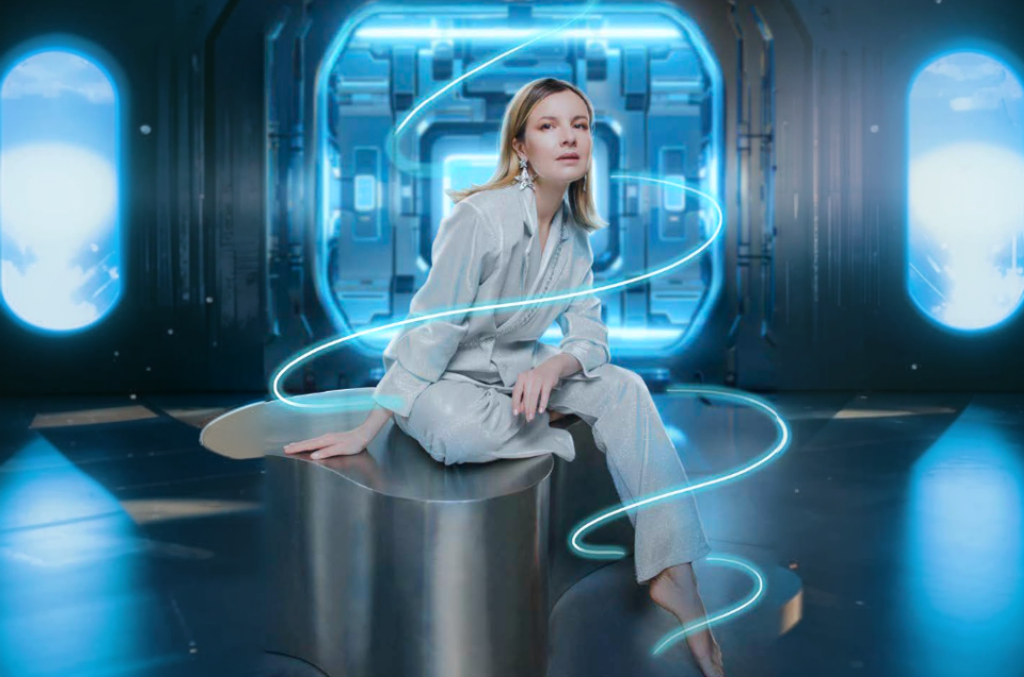
Lina Moskvina, CEO of MICE&more: «In 2025 I will celebrate my professional milestone — a quarter of a century in the tourism industry. If someone had told me 25 years ago that I would become the founder of a unique, international marketing ecosystem in the field of business tourism, I wouldn’t only not have believed that, but I wouldn’t even have known what was being talked about.
Today, my view of prospects and evelopment has grown to cosmic proportions, so I’m happy to share with you my vision, outlook and forecasts for the next few decades. Buckle up and let’s fly!»
WHY IS IT IMPORTANT TO THINK ABOUT THE FUTURE?
We live in an era of immediate needs and short-term thinking. Global corporations are willing to do anything to satisfy the growing demands of shareholders, natural resources are being consumed at an unprecedented rate, and politicians are discussing the use of nuclear weapons. What will remain for our descendants? Not to abstract future generations, but to our grandchildren and great-grandchildren? Will we leave them a safe, comfortable world or lifeless ashes? These are the questions that philosopher and sociologist Roman Krznarik asks in his book «One Hundred Years Ahead», which I’ve recently read.
The novel explains how to ensure that future generations can consider us good ancestors, to establish a personal, empathic connection with people whom we may not be destined to meet and whose lives we can hardly imagine.
It offers six conceptual and practical ways to develop longterm thinking as the basis for creating a new, more conscious world order that opens the way to a culture of long-term horizons and responsibility for the future. Although it is unlikely that the reader will be able to influence the fate of all humanity, everyone can contribute to a good future for our descendants.
HOW WILL URBANIZATION CHANGE IN THE FUTURE AND HOW WILL THIS AFFECT THE TOURISM INDUSTRY?
I will share the information that I took from various sources. According to sociologists, an increase of 2.4 billion urban residents is expected in the next 30 years. According to the UN, the highest rates of urbanization will be in Asia and Africa.
In 2020, more than 50 billion different devices were connected to the Internet, and now this figure has grown significantly. In the future, thematic residential clusters will be created based on interests, as in social networks or on a corporate basis, with all the necessary and ultra-comfortable humancentric infrastructure.
The deterioration of the ecology of megacities increases attention to eco-friendly solutions in the architecture of the suburbs and in the supply of wealthy areas of the city, and there is an active adjustment of lifestyle towards health.
This is a request from generations Y, Z and the next one. Millennials are being replaced by Generation Z — people for whom climate change is becoming a real threat. Refusal of plastic, waste management, conservation of resources and green energy are no longer slogans. For the new generation these are conditions of survival.
With higher population densities in cities, people will be more likely to seek privacy and access to nature. Not a single project can do without an environmental agenda. The presence of a brand, name and service on the Internet will become even more important and valuable. Remote professional clusters will form a new infrastructure of destinations. This is just a small part of the influence of trends that are worth thinking about today.
HOW WILL TECHNOLOGIZATION CHANGE IN THE FUTURE AND HOW WILL THIS AFFECT TOURISM?
Have you heard about such an invention as a quantum phone? It ensures constant communication quality at any distance and under any conditions, that is, it achieves absolute immunity from interference. It is impossible to secretly «snoop» on data transmitted over a quantum channel, and the data transmission speed is several orders of magnitude higher than the fastest networks operating today.
In the near future, a massive introduction of the Po WiFi system into everyday life is expected, which consists of routers with the function of transmitting electricity over several tens of meters (this powers gadgets and charges batteries from WiFi).
The creation of complex 3D printers and new materials for them will radically improve and reduce the cost of the surrounding material world. Personalization can be absolute. Any transport can also be quickly, cheaply and without waste printed on a 3D printer. Leading manufacturers are coining the term «multi functional mobile space».
The mobile capsule will be able to replace citizen's homes and offices. You can add or remove certain functions to it, for example, a place for sleeping or cooking. The prospects for robotics are impressive. Specialized prosthetic body parts (more functional than human organs) will be used as tools for androids. They will replace humans in human infrastructure. In some cases, such products will be preferable to the analog original. This will become one of the key elements of trans-humanism.
From the point of view of tourism development, I would especially like to note the prospects for movement. Transition from plane to space. Almost complete accessibility of any point on the planet, and in connection with this, a change in border systems. The creation of new standards for navigation and air traffic control.
It is interesting that the «collective unconscious» is used as an algorithm for the transport of the future, by the analogy of a flock of birds. It is planned to create and mass launch personal «volumetric» transport.
There is no need to even remind you about the widespread use of virtual and augmented reality. It will be almost impossible to do without them in work in the near future. We will meet digital avatars everywhere in a variety of areas and communicate with them. Each of our events will certainly be a hybrid with extensive use of VR & AR, and we will lose the line between the real and the virtual.
And we ourselves will also be «digitized», we are talking about personalized accounting. Some call it «digital slavery».
Laws on assigning a person an individual birth number are already being considered. It is assumed that the main problem in a world of individualism will be security. Among the good things to note is the increase in life expectancy, thanks to Eco-nutrition, a healthy lifestyle, biotechnology, nano-medicine, discoveries in the pharmaceutical field, 3D printing of human organs and genetic modifications.
WHAT WILL A TRAVEL CONSULTANT BE LIKE IN THE FUTURE?
Will artificial intelligence replace humans? I like the idea that a person will be replaced by a person who will successfully use this technology. What will a business traveler be like in 10-15 years? The service will be super personalized. Even if we compare the quality of travelling today and 5 years ago, the difference is significant. Today, the business traveler is not just one category, but a very diverse niche with its own subcategories, requests, and behavior patterns. By realizing this and using it in practice, you can already gain a competitive advantage, since in the future this approach will be widely used. Business tourism agencies and travel consultants will be in demand if, using their expertise, they build correct communication with the traveler, form and maintain longterm relationships, and do this with the help of artificial intelligence. Offline will be the new luxury in the future as online will dominate with more development and scale.
WHAT ARE MICE&MORE'S PLANS FOR THE FUTURE?
At the end of 2023, we have already taken a big step towards the future. Starting our journey as an industry media, we have grown into an international marketing Eco-system, which today combines print publications, multi-format digital resources (websites, social networks, digests, podcasts, videos), the visual project FOTO&more, special events and marketing projects, the educational direction of Marketing&more, as well as international — MICE&more International. Our task is to celebrate our 10th anniversary in 2025 and move forward rapidly, taking into account all the main trends.
In 2022, we planted a coral in the Maldives and dedicated it to the MICE industry so that it can grow and prosper, albeit slowly but surely. Our plans are to return and continue this tradition. We also plan to plant more than 40 trees according to the number of issues of the magazine published, to compensate for paper consumption.
We actively use new technologies and are thinking about their development today. For now, the printed version remains extremely in demand, since in contrast to the colossal volume of digital information, it’s nice to pick up a high-quality information product, do a digital detox and enjoy several senses at once. The pleasant smell of a freshly printed publication, smooth paper, highquality and large photos, modern design. However, a PDF version of each issue is already available today, which is easy to download and read on any electronic device.
As an Eco-system, we will develop integrated solutions where projects, ideas and directions will intersect. Readers of the magazine will be able to download podcasts or audio versions of articles and interviews using a QR-code. The crowd sourcing concept will allow you to attend industry exhibitions and workshops through a virtual browser. The development of an industry application will allow all industry participants to have access to the largest database of contacts worldwide.
We have an endless number of ideas and plans. Also, initially we use a very modern approach to organizing the work process. Everything that our team creates is creative, and for this several factors are important: a constant influx of new things, movement and development. It is also important to be able to work anytime and anywhere, because inspiration can strike at any moment. It is also important to take into account the biorhythms and characteristics of each specialist individually. All these factors include the remote work mode, which we have been observing for the 9th year, but we meet weekly to discuss current tasks and exchange ideas.